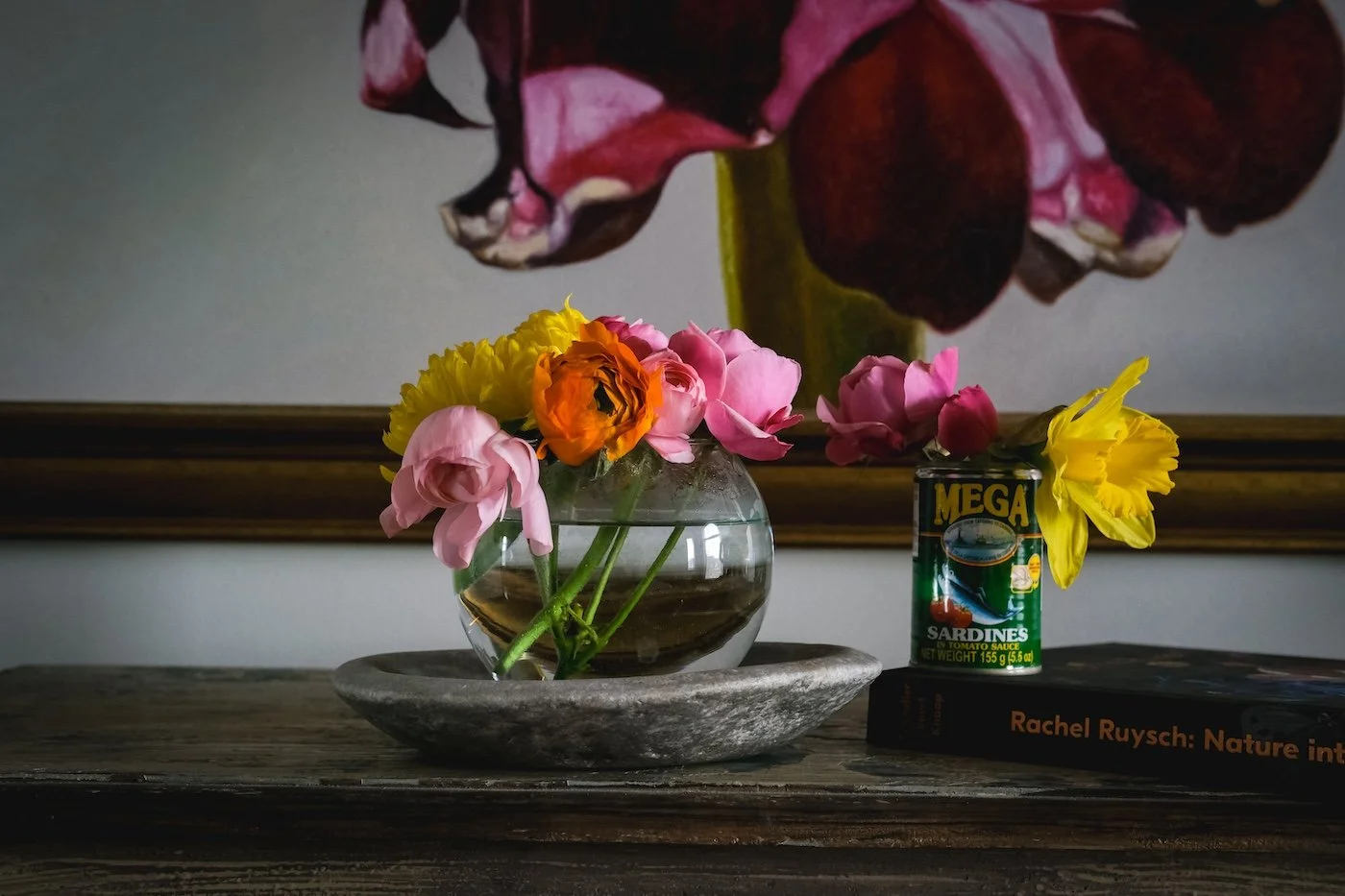
Beauty School
Every day I think, the world cannot get any worse, and every day it is. At what point do we turn our backs on beauty? I think the answer is that we need to keep renewing it, keep planting the sunflower seeds, keep sowing beauty. A few people I know are thinking about retraining in their work, because life isn’t what it used to be. Life is never what it used to be, which is intolerable and yet we humans go on tolerating it. And so I’ve decided to return to beauty school. I don’t suppose I’ve ever left it.
(Note: this is the beauty school — you’re here now. It’s wherever you are).
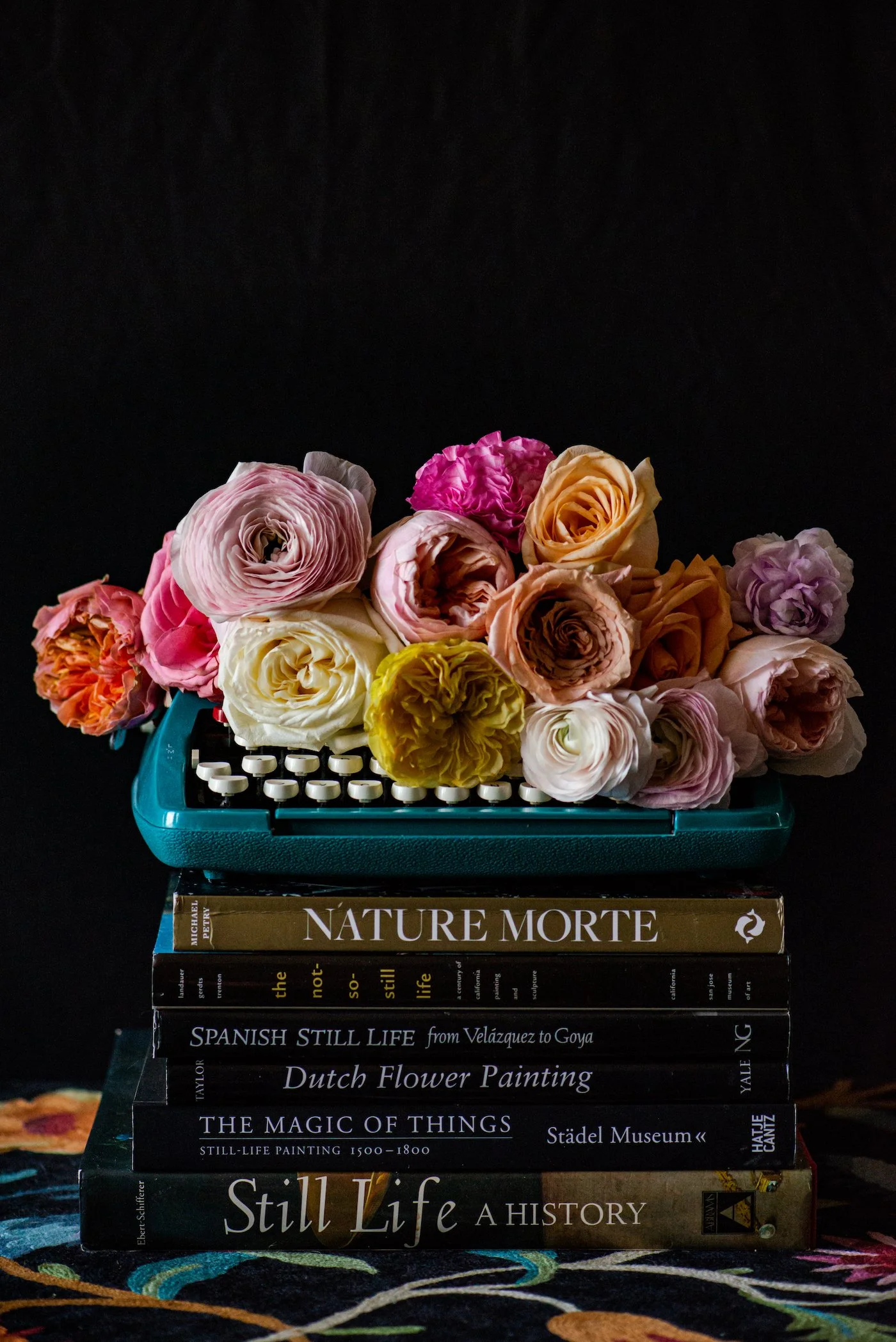
Do you know the book by Lawrence Weschler Vermeer in Bosnia and the title essay? It’s a book that has survived several weedings of my personal library. I was reminded of it by Rebecca Solnit though in her book Orwell’s Roses. Weschler asks a judge in The Hague “how he could stand to listen to the stories of atrocities day after day in the International Criminal Tribunal…” and the judge answers, “As often as possible I make my way over to the Mauritshuis museum, in the centre of town, so as to spend a little time with the Vermeers.” Solnit says: “The argument that all art must exhort us overlooks the needs and desires of those who are already engaged, and what fuels them, and what the larger work of building a society concerned with justice and compassion might be.” Art she says, may “equip a person to meet the crises of the day.”
She adds that “human beings need reinforcement and refuge, that pleasure does not necessarily seduce us from the tasks at hand but can fortify us. The pleasure that is beauty, the beauty that is meaning, order, calm.”
Of course I can’t write about the Vermeers at Mauritshuis and not think back to our trip to Amsterdam when I went to research the Museum of Bags and Purses while writing Rumi and the Red Handbag). Extremely sad that the Tassenmuseum is now closed. It was such a jewel). We had gone to visit Rob’s cousin in The Hague which is where she was living and also had the opportunity to see the Vermeers that Weschler speaks about. All so memorable!
There is a poem that arrived in my inbox this week, and I’m of a mind to leave it there for some time. It’s by James Crews (you can sign up for his newsletter here). The poems is titled, “Prayer to Be Changed” and begins:
I ask for just the slightest shift
in my thinking, the kindest sifting
of my busy mind, so only wonder
and peace are left behind.
And you can read the whole thing on James Crews’s Instagram.
And maybe looking at beautiful things, making them, attending to the small things in our limited spheres that open us up, rest us, shock us with their loveliness, can help us in those slight shifts of thinking, too.
Another book from the depths of my book shelf is On Beauty and Being Just by Elaine Scarry. She reminds us that “The surfaces of the world are aesthetically uneven. You come around a bend in the road, and the world suddenly falls open…” This can be “radically decentering,” she says. These moments “act like small tears in the surface of the world that pull us through to some vaster space.”
There is a suddenness to beauty, a shock to it. I sometimes think I’m quite dulled to the world these days, but then it happens, I’m pulled through, and that reminds me what I’m here for. What tasks are important to me. And that’s not just writing or photographing, but trying to make the world slightly better, however I’m able. And so my mind is slightly shifted, and I can go on.

Joan Chittester has said, “It is Beauty that magnetizes the contemplative, and it is the duty of the contemplative to give beauty away so that the rest of the world may, in the midst of squalor, ugliness, and pain, remember that beauty is possible.”
And maybe that’s the number one rule of beauty school: it is your obligation to keep giving beauty away. Or, as I often say here, you are required to make something beautiful. Which, can I even say that often enough? I think not.
April 27, 2022