Jigsaws and How to Be
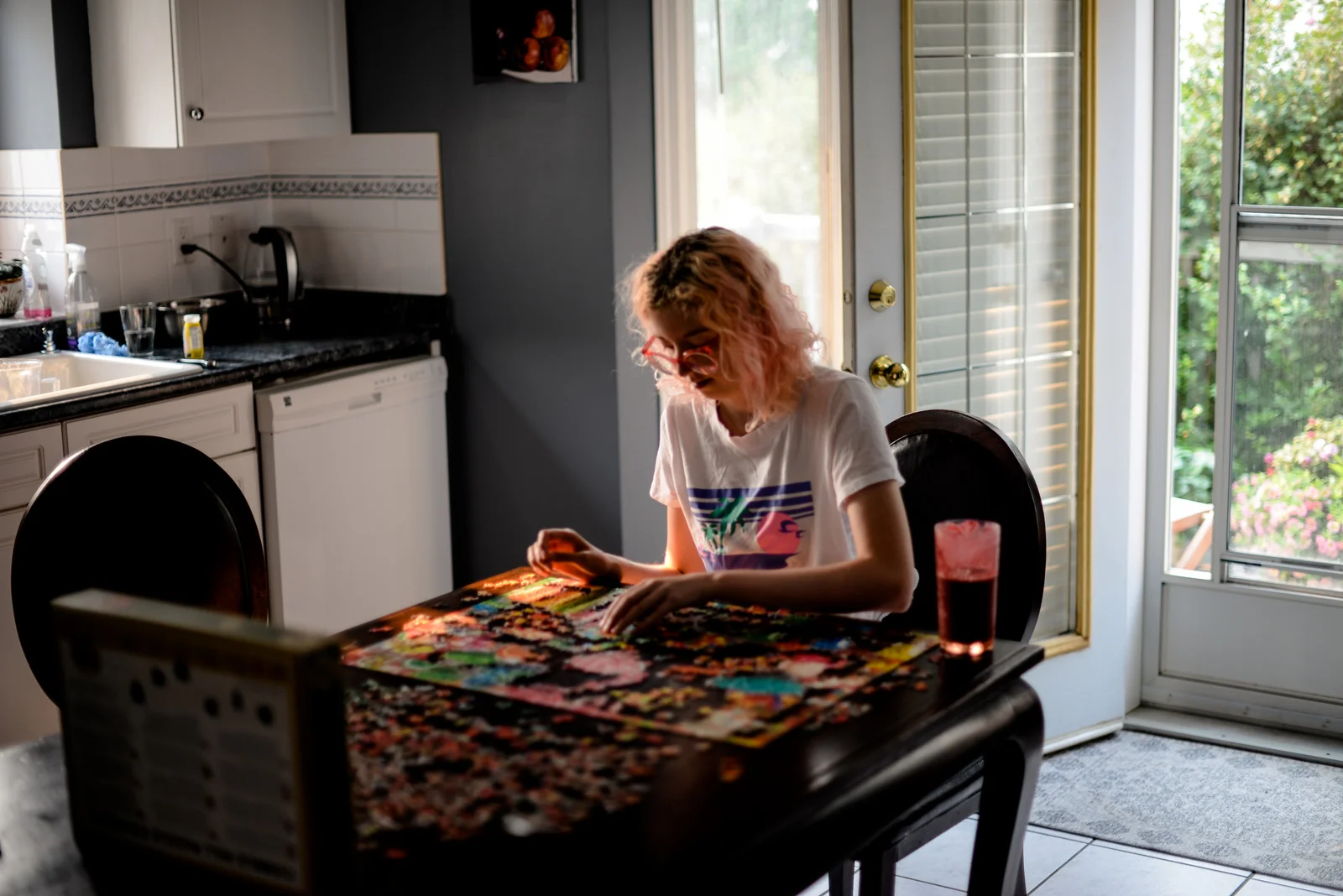
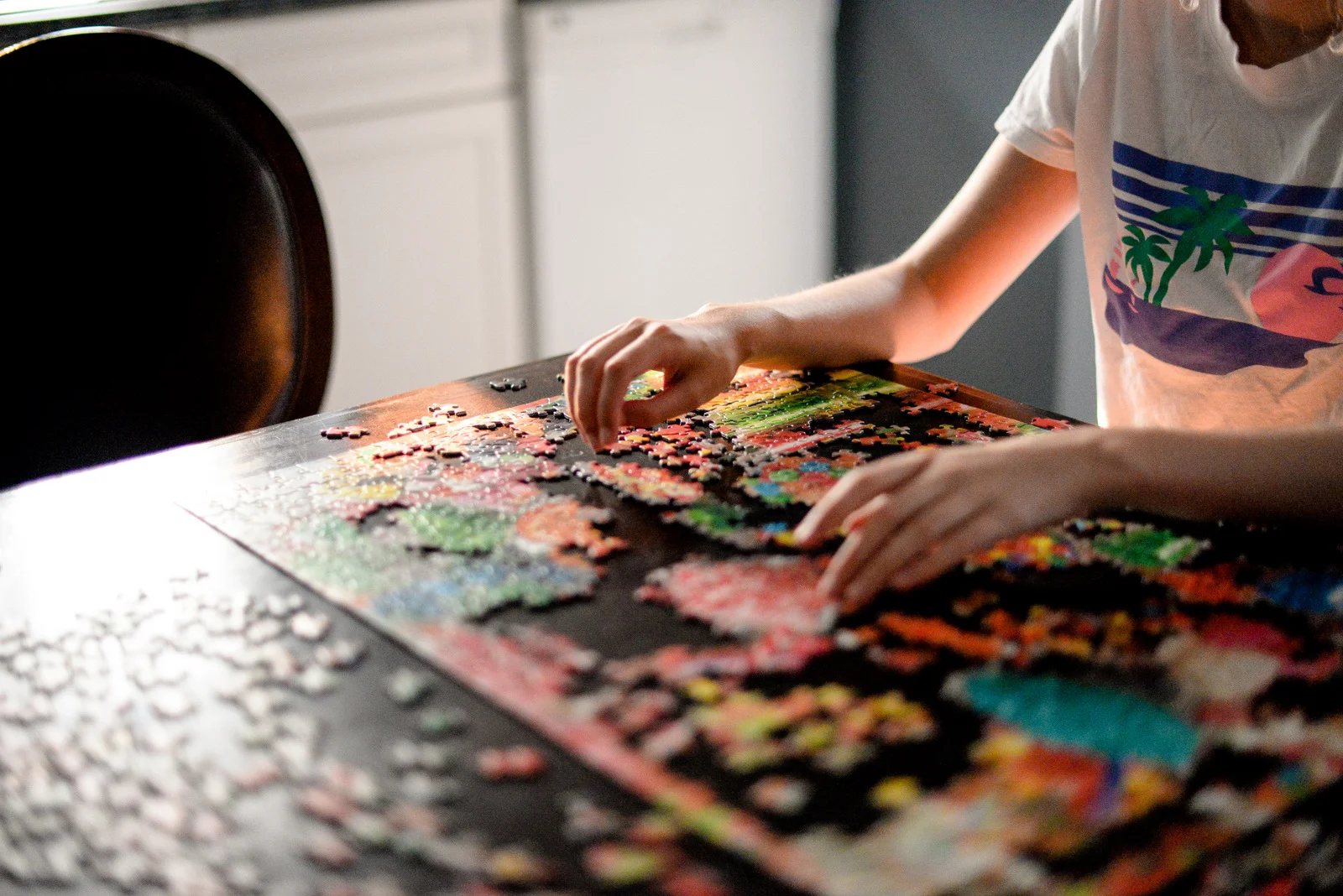
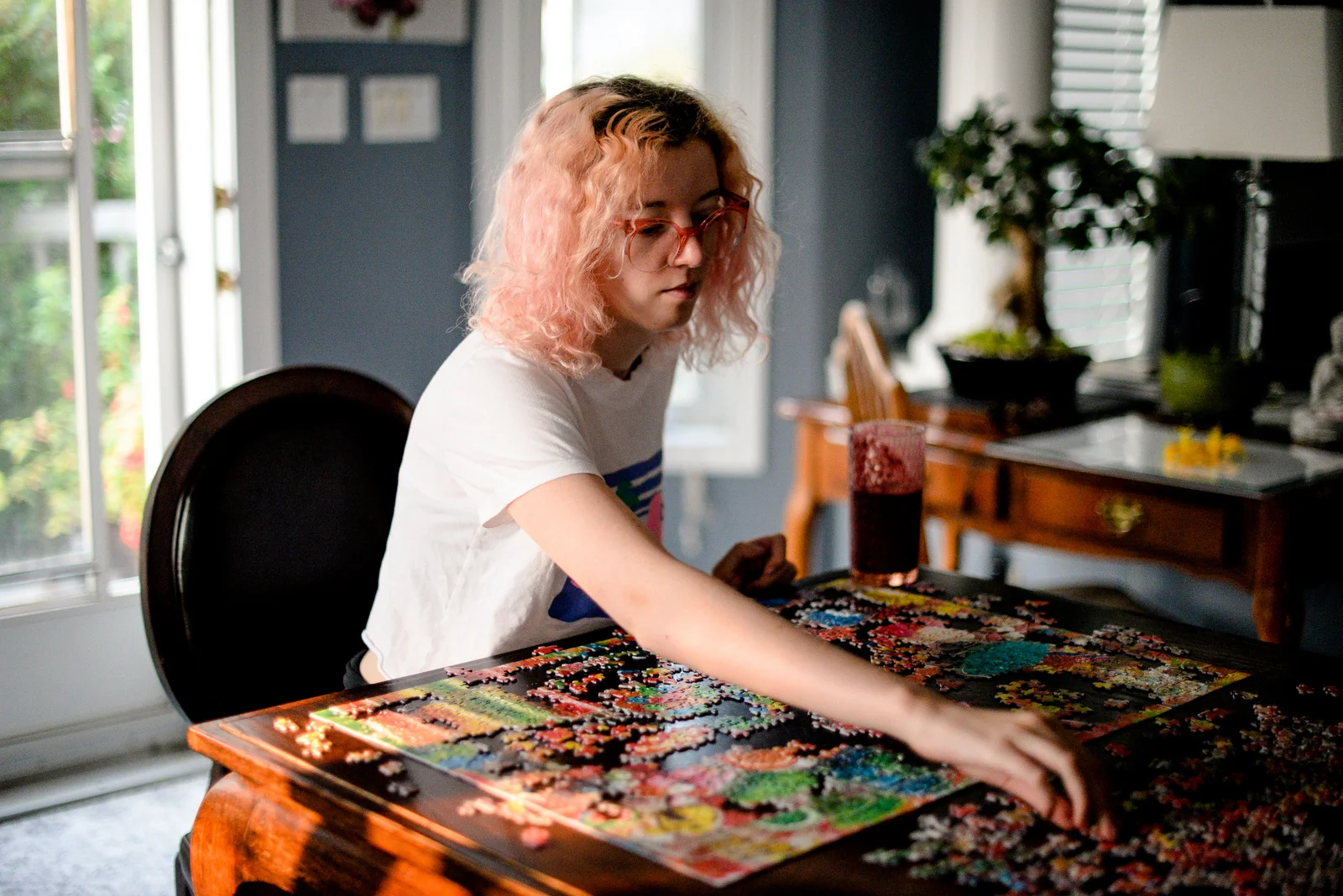
For a few years we did jigsaw puzzles at Christmas, and then my mother-in-law started doing puzzles year round, which is a marvellous thing to do, and we sort of dropped off from the jigsaw craze, while she took it up. But Chloe and I saw one when we were out on errands one day, and she wanted to give it a whirl, so here we are. A few pieces here and there, at breakfast or after dinner. I’m calling it the jigsaw puzzle cure. Not that we’re ailing, particularly, but it brings us together for a while and we laugh and get excited when a piece goes in, and generally think about nothing except the puzzle. The one we’re doing now is of candy jars, and the first one we ever did together was of a box of chocolates. So you can see a theme there.
I read Margaret Drabble’s oddly lovely memoir The Pattern in the Carpet last year and passed it on to my MIL so I don’t have it in front of me, but in it she says, (thank you GoodReads):
“Doing a jigsaw was not an intelligence test, or a personality assesment programme; it was a pursuit that lay somewhere between creation and imitation and discovery and reverie.”
There’s an excerpt on NPR here if you’re interested.
You can sit at the table and find 3 pieces to fit the puzzle immediately, and then you just sit there for a while and nothing works. You ignore it and look over your shoulder, get some tea, and then come back to it again, and more pieces fit in. Later you move to the other side of the table, and yet more pieces fit together. It reminds me of writing a little bit.
So it turns out when you search for poems with the word jigsaw in them, beautiful things will turn up. Here is a poem (or is it an essay?) by Kathryn Nuernberger, from Brevity magazine which is about kindness and connections and memory and motherhood. And more than that, too, but have a read:
Little Lesson on How to Be
by Kathryn Nuernberger
The woman at the Salvation Army who sorts and prices is in her eighties, and she underestimates the value of everything, for which I am grateful.
Lightly used snow suits, size 2T, are $6 and snow boots are $3.
There is a little girl, maybe seven, fiddling with a tea set. Her mother inspects drapes for stains.
Sometimes the very old and lonely are looking for an opening.
The woman glances up from her pricing and says something about the tea set and a baby doll long ago.
I am careful not to make eye contact, but the mother with drapes has such softness in her shoulders and her face, and she knows how to say the perfect kind thing—“What a wonderful mother you had.”
“Yes, she was.”
Why do children sometimes notice us and sometimes not?
From the bin of dolls: “What happened to your mother?”
“She died.”
The woman at the Salvation Army who sorts and prices is crying a little. She seems surprised to be crying. “It’s been eighty years and I still miss her.”
When my daughter was born I couldn’t stop thinking about how we were going to die. If we were drowning, would it be better to hold her to me even as she fought away, or should I let her float off to wonder why her mother didn’t help her? What if it’s fire and I have one bullet left? I made sure my husband knew if there were death squads and he had to choose, I’d never love him again if he didn’t choose her. If I’m lucky, her crying face is the last thing I’ll see.
The mother with drapes is squeezing her daughter’s shoulder, trying to send a silent message, but children are children. “Why did she die?”
“She was going to have a baby and—And she died.”
“But she was a wonderful mother.”
I’m holding a stack of four wooden jigsaw puzzles of farm animals, dinosaurs, jungle animals, and pets. Each for a quarter.
“It’s silly how much I still miss her.” She takes out a tissue and wipes her eyes and then her nose.
When my grandmother threw her sister, Susie, a 90th birthday party, one hundred people came, including five of the six brothers and sisters. At dusk only a few of us were left, nursing beers, our feet kicked up on the bottom rungs of various walkers.
Susie said then to my grandmother, “Can you think of all the people watching us in heaven now? And our mother must be in the front row.”
Grandma took her sister’s hand. “Our mother—Estelle.”
“Yes—her name was Estelle. I forgot that.”
They looked so happy then, saying her name back and forth to each other. Estelle. Estelle.
To learn more about Kathryn Nuernberger, here’s her website. Her latest book is intriguingly titled, Brief Interviews with the Romantic Past, which is now on my to-read list.
I love the image in the essay of the narrator holding the jigsaw puzzles. You can’t help but think how precarious that is – what if they all spilled? And then, how different the pieces must be from each other, in the four separate boxes. You can see them getting mixed up, or that one of them will be missing a piece or two. But it’s a hopeful thing, to buy a puzzle from a Salvation Army. Most of the pieces will fit together and there will be the added suspense of putting them together because maybe all the pieces will be there and maybe they won’t.
Anyway, wouldn’t we all like to be the woman who knows the perfect kind thing to say. I know I would.