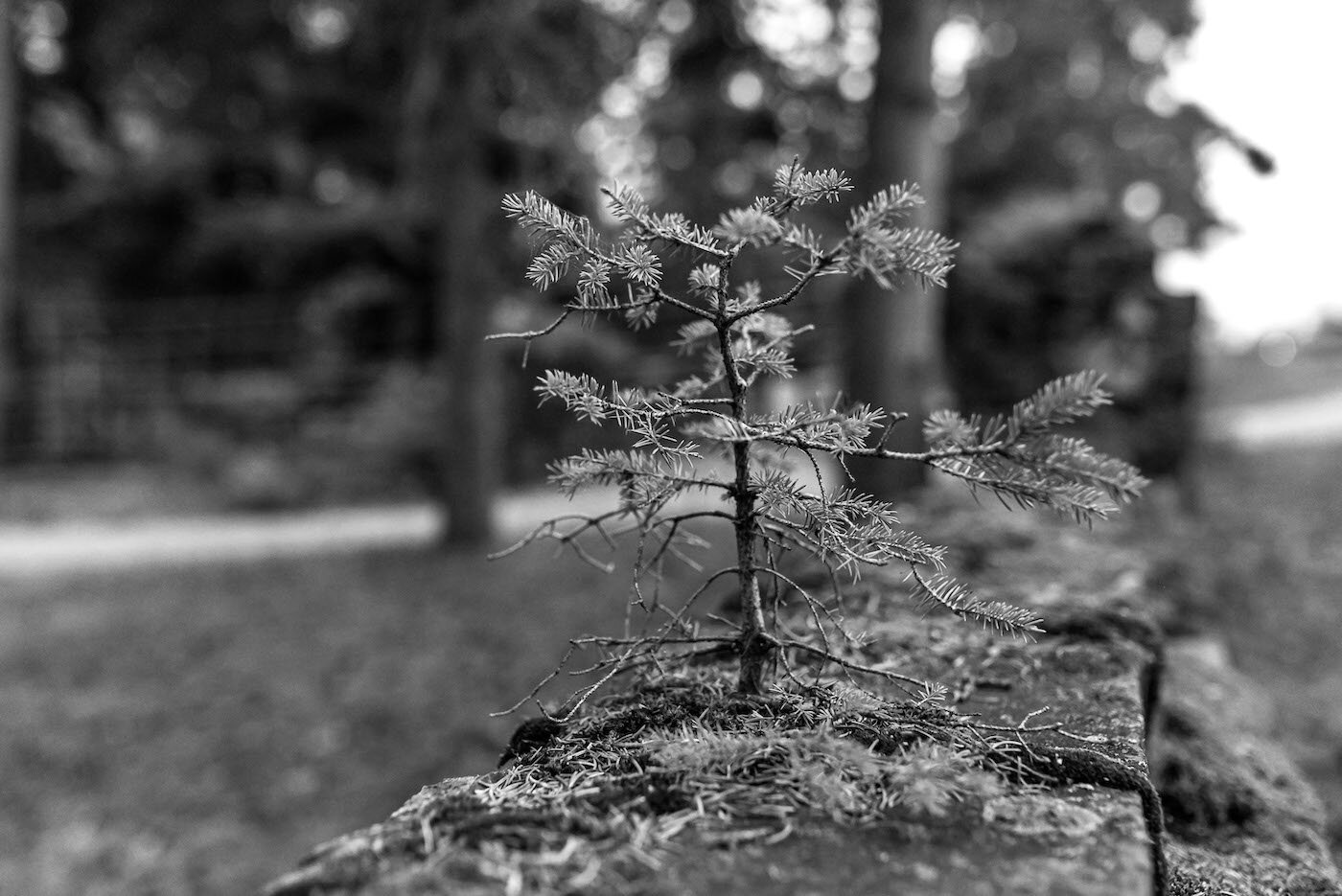
…that summer was just about over
All week I’ve had a book with a broken spine cracked open in my study. (Which could be how it came apart in the first place). It’s a well-loved book, as so many of mine are, and becoming more beloved all the time. This is Another Beauty by Adam Zagajewski.
I’ve been doodling in the mornings, with and without words. What can I say, it’s the therapy I can afford and there are worse methods to get one’s s-h-i-t together. One of the phrases that comes up is one of my favourite lines from AZ:
“It’s not time we lack, but concentration.”
The paragraph right before that one reads:
“In a bus once someone started holding forth, insisting — it was mid-May — that summer was just about over. It’s mid-May now, the argument ran, June is always over before you know it, then July’s gone by, next it’s August, then suddenly you’ve got September and the weather’s getting cold!”
And then he hits us with that single line: “It’s not time we lack, but concentration.”
The first bit is pure comedy. I wonder if Zagajewski would have come to that line without overhearing the comic bit on the bus. Or maybe he had it first and then heard the conversation and put them together. We’ll never know, as it should be. As it should be.

I’m feeling the black dog’s presence these days, which I know I don’t have to say and maybe shouldn’t.
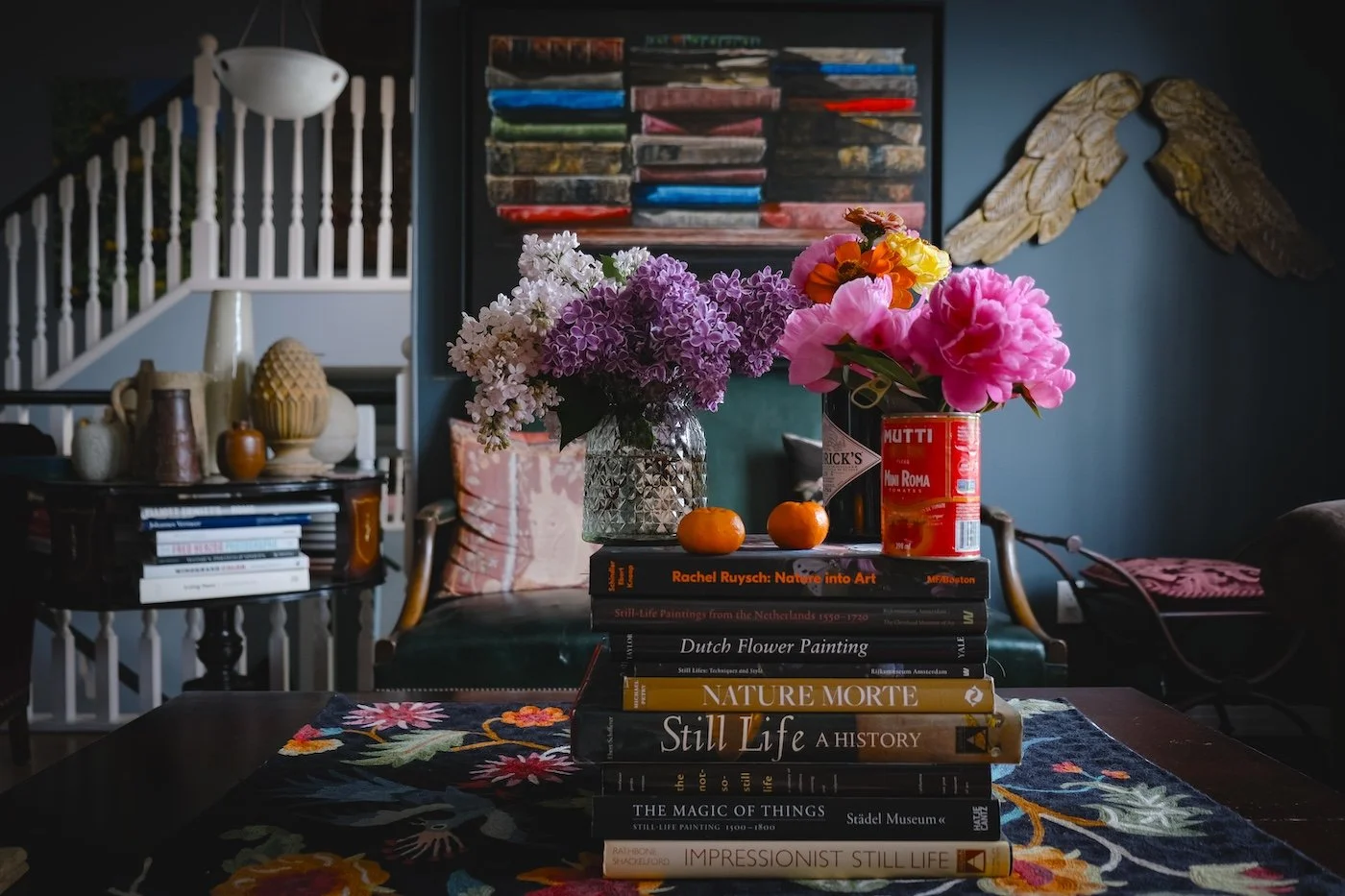
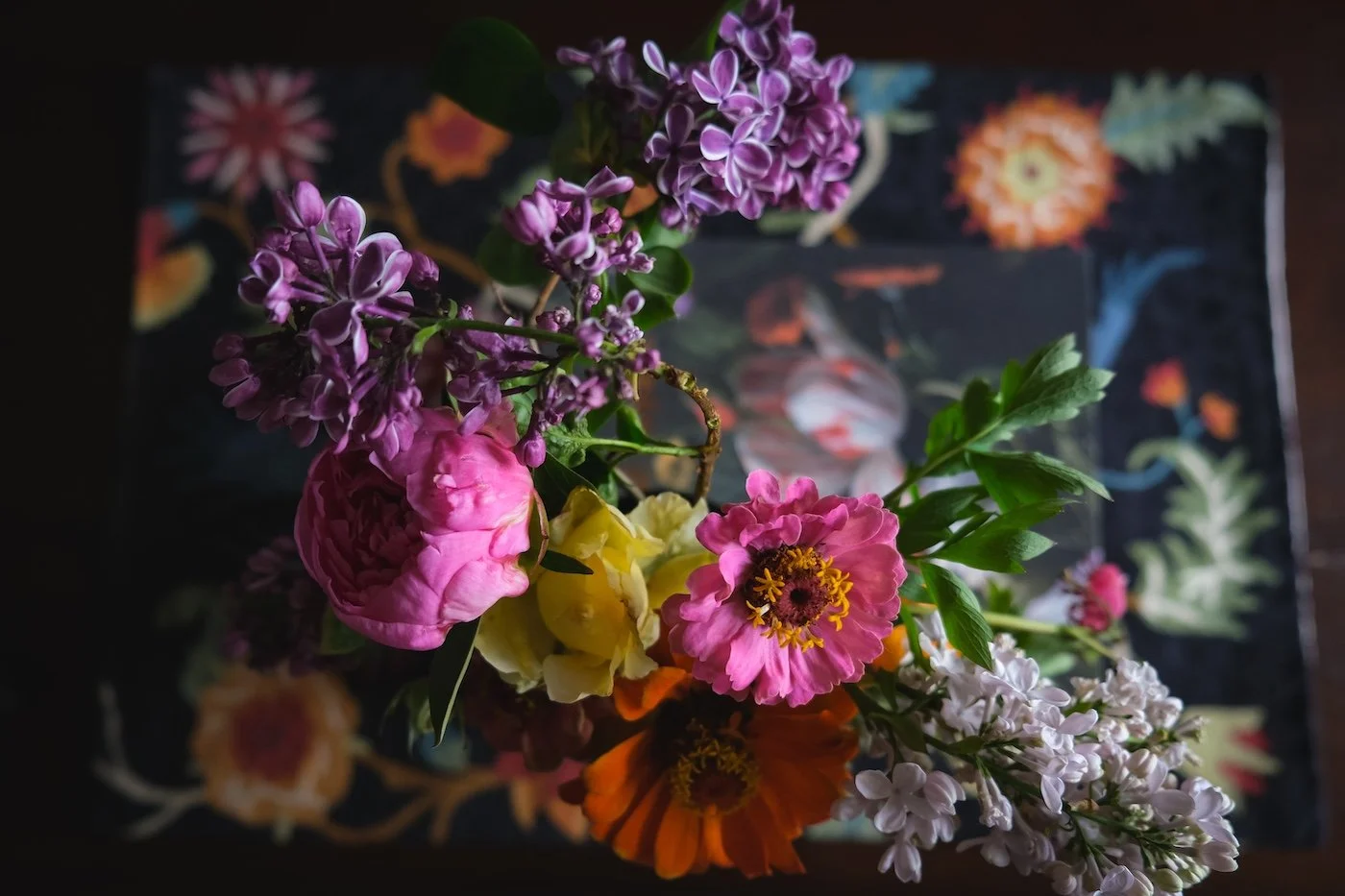
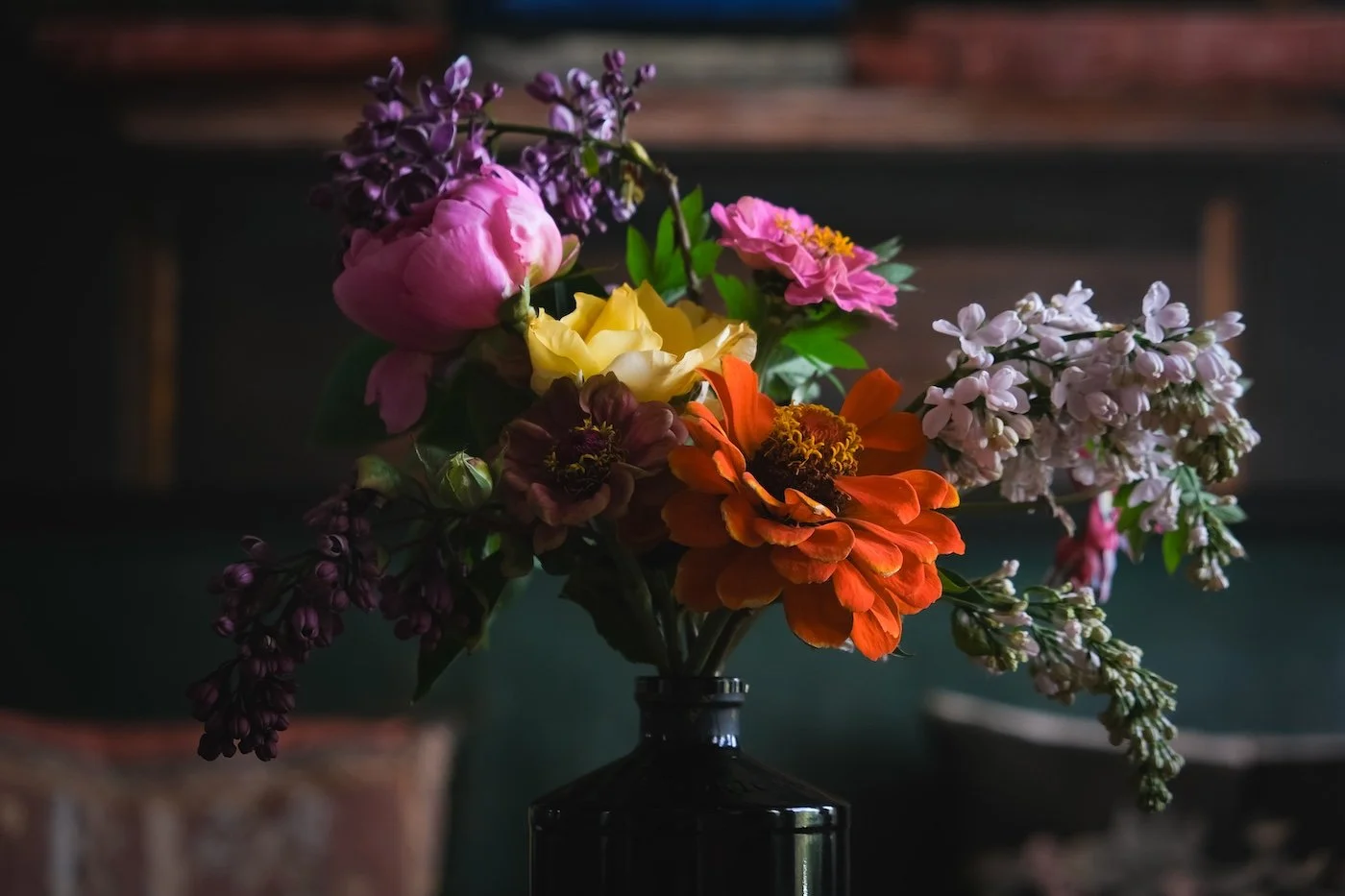
I took photos of the first bouquet from our yard this year. Later I’ll take a photo of the last one. I’m not sure why the last one seems to get more fanfare from me, showing up in essays, and whatnot. Well, memento mori.
Last week we found we had a litre of milk which would have been well past its best before date when we bought it. It seemed fine, actually. We’d gone through a third of it before noticing.
I’ve been listening to Bruce a lot lately. The lyrics to Downbound Train play on repeat in my head.
Now I work down at the car wash
Where all it ever does is rain
Don't you feel like you're a rider
On a downbound train?
When the black dog comes, I get out my pile of therapy books, Anchored by Deb Dana and A Healing Space by Matt Licata. But I always end up reading about Affect Theory. I first started reading about it with Ordinary Affects by Kathleen Stewart which I love for so many reasons. And then I’ve quoted from Lauren Berlant’s Cruel Optimism here and there. The publisher says about CO, that it:
“traces affective and aesthetic responses to the dramas of adjustment that unfold amid talk of precarity, contingency, and crisis. She suggests that our stretched-out present is characterized by new modes of temporality, and she explains why trauma theory—with its focus on reactions to the exceptional event that shatters the ordinary—is not useful for understanding the ways that people adjust over time, once crisis itself has become ordinary.”
Kathleen Stewart writes the afterword to The Affect Theory Reader. And what is jumping out at me right now is her discussion of the world as bloom space. She begins by saying, “What is, is a refrain.” Refrains, she says, are a “worlding.” Which is a word I am loving trying to wrap my mind around. We are “living out” and “public feelings world up.” And what we are living out is “accrued, sloughed off, realized, imagined, enjoyed, hated, brought to bear or just born in a compositional present.” We are living out our flowers, since we all have been one or two of those, in a compositional present, composing, decomposing, we are bearing it all, being born, we are accruing.
This kind of writing helps my brain make sense of the contradictory flow around me where I am imagining enjoying hating things simultaneously. I think I’m excellent at holding contradictions but I’m also a human who knows the affects of holding them for too long. The rain at the carwash on a sunny day can be too much.
What we can do is “hone critique to an inventory of shimmers.” We can sharpen our attention to “the expressivity of something coming into existence.” We can listen to what hums. Where are the obstinacies? Where can we rest? What are the rhythms of life now? What are your conditions? What world might open up? Stewart says, “…and then the next thing — another little world is suddenly there and possible. Everything depends on the dense entanglement of affect, attention, the senses, and matter.” She says:
“All the world is a bloom space now. A promissory note.”
And, a bloom space is “an allure and a threat” and it shows up in “not being able to sit still, being exhausted, being left behind or being ahead of the curve, being in history, being in a predicament, being ready for something — anything — to happen…”
She says, “Affect matters in a world that is always promising and threatening to amount to something.”
How are things coming into being these days, what are the refrains? What are the bloom spaces and how can we note them? Stewart: “A bloom space is pulled into being by the tracks of refrains that etch out a way of living in the face of everything. These refrains stretch across everything, linking things, sensing them out — a worlding. Every refrain has its gradients, valances, moods, sensations, tempos, elements, and life spans.” She talks about living in a coal mining camp when Reagan is elected. “Right away everyone knew that something was happening, that we were in something.”
I guess what I’m trying to say is that we’re in something. And maybe we’re always in something, but this is a new something with new refrains, and people have to make something of it which might mean engaging in tiny tyrannies, saying no, asking a lot of questions even when being shut down. It’s maybe attending to the senses, to the residues of people circumventing, dropping out, dropping in, unsubscribing, making what they can of what they’re given, blooming, listening to stories, hearing the premonitions of others, noticing where the black dogs are in the shadows behind someone. It might be looking at the residue of the lives right in your vicinity and see how they’re wilting or blooming or which flowers are on fire, which are in the rain.
In another essay in the Affect Theory Reader, Brian Massumi talks about the way future threat operates on humans. He says, “Imagine a dreamer who suddenly hears a loud and prolonged fire alarm.” This instance will provoke one feeling after another. And, will “act on the nerves of the person and force his attention.”
It feels like we’re on a downbound train, lacking concentration, listening to that prolonged fire alarm. But also, we’re in a bloom space, we can still dream. Anything might happen next. We’re in history. There’s a lot to notice, and to write about. There are conversations on buses to overhear and which might inspire lines that resonate for someone you’ve never met in some future who sits in her room surrounded by books she loves, doodling to keep from falling apart. We can remember to assume a comedic distance. We all still have this one life and we are still required to make something beautiful.
So that post is really where this current blog began, ten years ago this coming September. Which is a bit wild to me. What does one do with that? Celebrate it? Continue? Retire it? Try to make it more of something? Delete it? I honestly don’t know right now.