Art’s Power to Change You
— I remind myself that one needn’t pay too much attention to things like the existence of Meta Glasses, but at the same time, as someone who has been reading about the male gaze, reading John Berger, Sontag, WJT Mitchell, Barthes, you name it, forever, I can’t not think about this moment. Very little, by which I mean nothing, to redeem this invention, but there will be a lot of fodder for anyone writing about seeing, surveillance. A perversion of photography. I’m sure you could form interesting insights as to its difference from street photography and how this is just creepy, and in no way related to the art form. There are no parameters, for one, no ethics, and street photography has those. No art either. There are so many reasons why these glasses suck, but I can see them being used in secret shopper scenarios etc and that’s one more reason to hate them.
— I’m a terrible person, a true monster, and also clearly am back to reading too much on AI this past week (I’m on a full stop in that regard next week I swear) but I did laugh when I saw this sentence in an article recently:

— I think she might mean “comprised” rather than “compromised” but who am I to say? And yes, I know this blog is often riddled with typos, but at least you know I made them via the lights in my own skull.
— I’m sure I’ll come back to that subject in future posts. I’ve still been thinking about how art forgers such as Van Meegeren took in folks. From our vantage point we look at his work and wonder how anyone could have thought it a Vermeer. When I was working on my book about art forgery, Hive, I was taken by the way that experts with a knack and obviously a deep understanding of art and art history, would often just know, before employing the scientific tests. If you live with a fake work over time, it just starts to feel wrong, bad, odd. It gives you a gross feeling. Well, enter degenerative AI. Sure we’ve all been taken in by some, or just grossed out by the stuff, but the biggest problem with it is it feels wrong. There’s a hollowness to the tunes it sludges out. The colours are wrong. There’s an empty feeling you get when you experience the slop. It might take a while. You hang a fake painting up in your house for a while, it acts upon your psyche. Same deal here.
— I recently picked up a copy of Oh, to Be a Painter! by Virginia Woolf at Audreys Books. In the intro, Claudia Tobin notes that “Woolf asked urgent, difficult questions about art and its survival that resonate in our times: take note, reader, she seems to say, but also take sustenance from a resolve and belief in art’s power to change you.” p. 23.
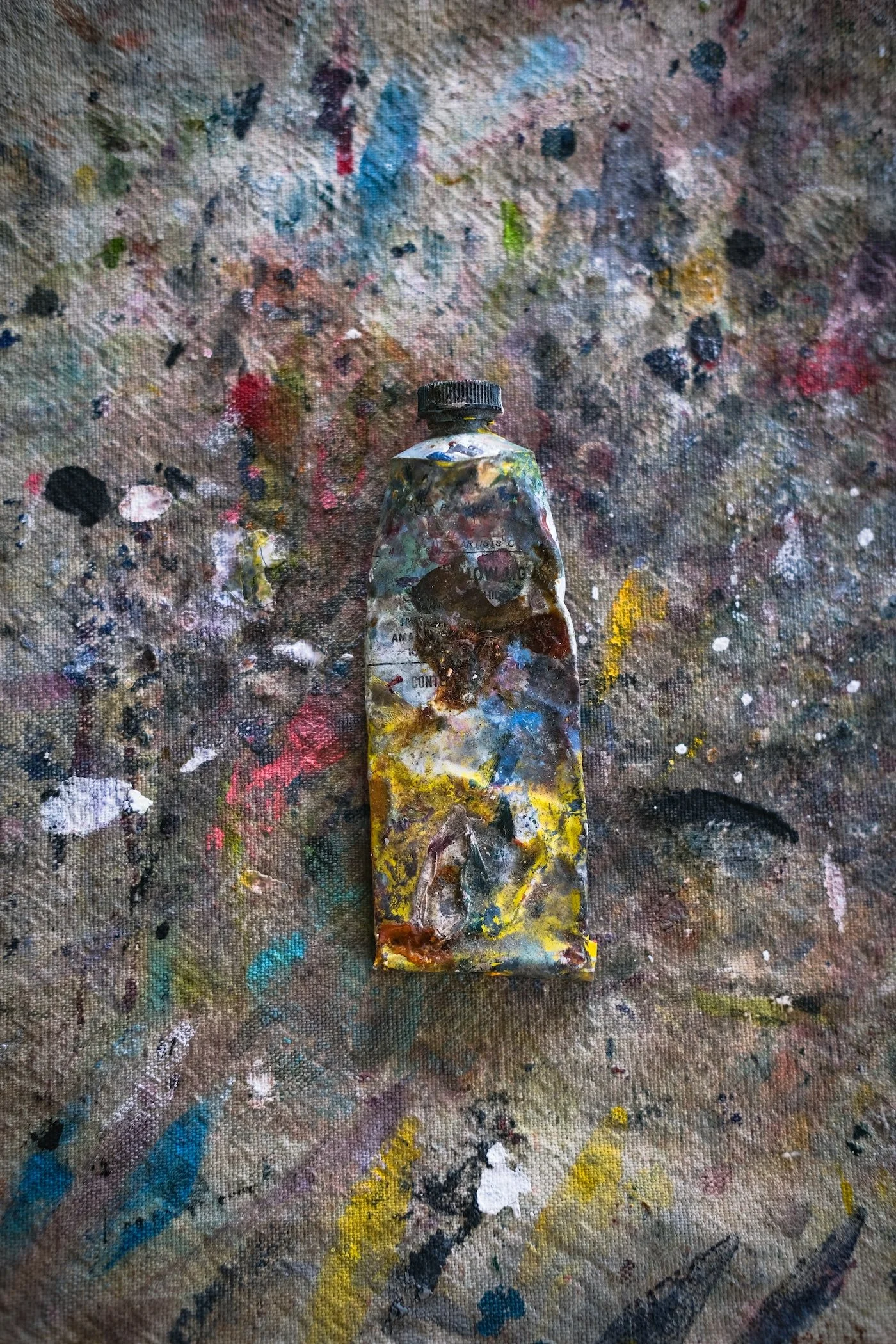
— Well, Virginia Woolf knew her way around a sentence. She also says this: “But words, words! How inadequate you are! How weary one gets of you! How you will always be saying too much or too little! Oh to be silent! Oh to be a painter!”
— Woolf is at a dinner party and the talk turns to colour: “how different people see colour differently; how painters are affected by their place of birth, whether in the blue South or the grey North; how colour blazes, unrelated to any object, in the eyes of children; how politicians and business men are blind, days spent in an office leading to atrophy of the eye…”
— I still think about the apple test a lot. Like, how can we even talk to each other when we don’t know what our minds are capable of conjuring or not conjuring up?
— It’s nice to have a lot of my objections to sloppola itemized in a list.
— Okay, moving on to poetry. Thinking of John Berger and his thoughts on the male gaze (I’m sure he thought we’d be well past bringing him up on this subject by now), I took And Our Faces, My Heart, Brief as Photos, off the shelf. What a lovely thoughtful book that has been. Poems are nearer to prayers, he says. And, “Poems, regardless of any outcome, cross the battlefields, tending the wounded, listening to the wild monologues of the triumphant or the fearful. They bring a kind of peace. Not by anaesthesia or easy reassurance, but by recognition and the promise that what has been experienced cannot disappear as if it had never been.” He says, “The promise is that language has acknowledged, has given shelter, to the experience which demanded, which cried out.”
— Lastly, how about a poem?
Enemies
by Wendell Berry
If you are not to become a monster,
you must care what they think.
If you care what they think,
how will you not hate them,
and so become a monster
of the opposite kind? From where then
is love to come—love for your enemy
that is the way of liberty?
From forgiveness. Forgiven, they go
free of you, and you of them;
they are to you as sunlight
on a green branch. You must not
think of them again, except
as monsters like yourself,
pitiable because unforgiving.