I'm Just a Soul
— On repeated play this week, Lana Del Rey’s version of Don’t Let me Be Misunderstood. (Compare to Nina Simone, 1964). Not sure why this song is hitting me so hard, but I'm a LDR fan so maybe that’s enough of a reason. We’re all just souls whose intentions are good. We’re trying our best at a weird and difficult time.
— We watched Peter Hujar’s Day last night. I loved the bloody whole slow thing of it. The life of the artist, the day in the life, the project behind it that never really took off, the lost recordings, the chance transcripts, the way Ira Sachs turned transcripts into a beautifully cinematic work of art. The details and decor of the apartment killed me. The light. The complex simplicity. The many words.
— From Rachel Pronger’s review on Frieze: “Where other artist biopics lead with passion and inspiration, Sachs’s offers anxiety, fatigue and ordinariness. Hujar worries that ‘nothing much happens’ in his days; his late night overworking a symptom of the fear of squandered time. Yet, he acknowledges ‘sometimes I just have to stand and stare’ to find deeper meaning in his images. What drove Hujar to keep creating despite his frustrations is the same thing that makes Sachs’s audience continue watching despite the tedium; it’s those blink-and-you’ll-miss-it moments of being in the presence of something – or someone – greater than yourself.”
— His photographs.
— Not to bring it all back to me, but also, yes. If anyone ever makes my book Everything Affects Everyone into a film and they won’t but that’s how I’d like it done.
— I wasn’t at all expecting it to be like Perfect Days, a favourite film of many of us I’m sure, and it really wasn’t but also, vibes? I know I’ll be watching it again some day and also that I’ll be thinking about it for a while. That’s art babies. Funnily, we’d just watched the second series of the Night Manager with Tom Hiddleston and it was gripping. And also, Tom Hiddleston. But I’ll never watch it again. Can’t say I’ve given it much of a second thought other than, why did SO many people need to die? Probably NM says a lot about our time though, more than it intends to, or maybe there’s intention but most people will just take it as a straight up action suspense narrative. But PHD. I dunno. I want more of that. Please and thank you world.
— Also: Ben Whishaw. OMG. Greatest.
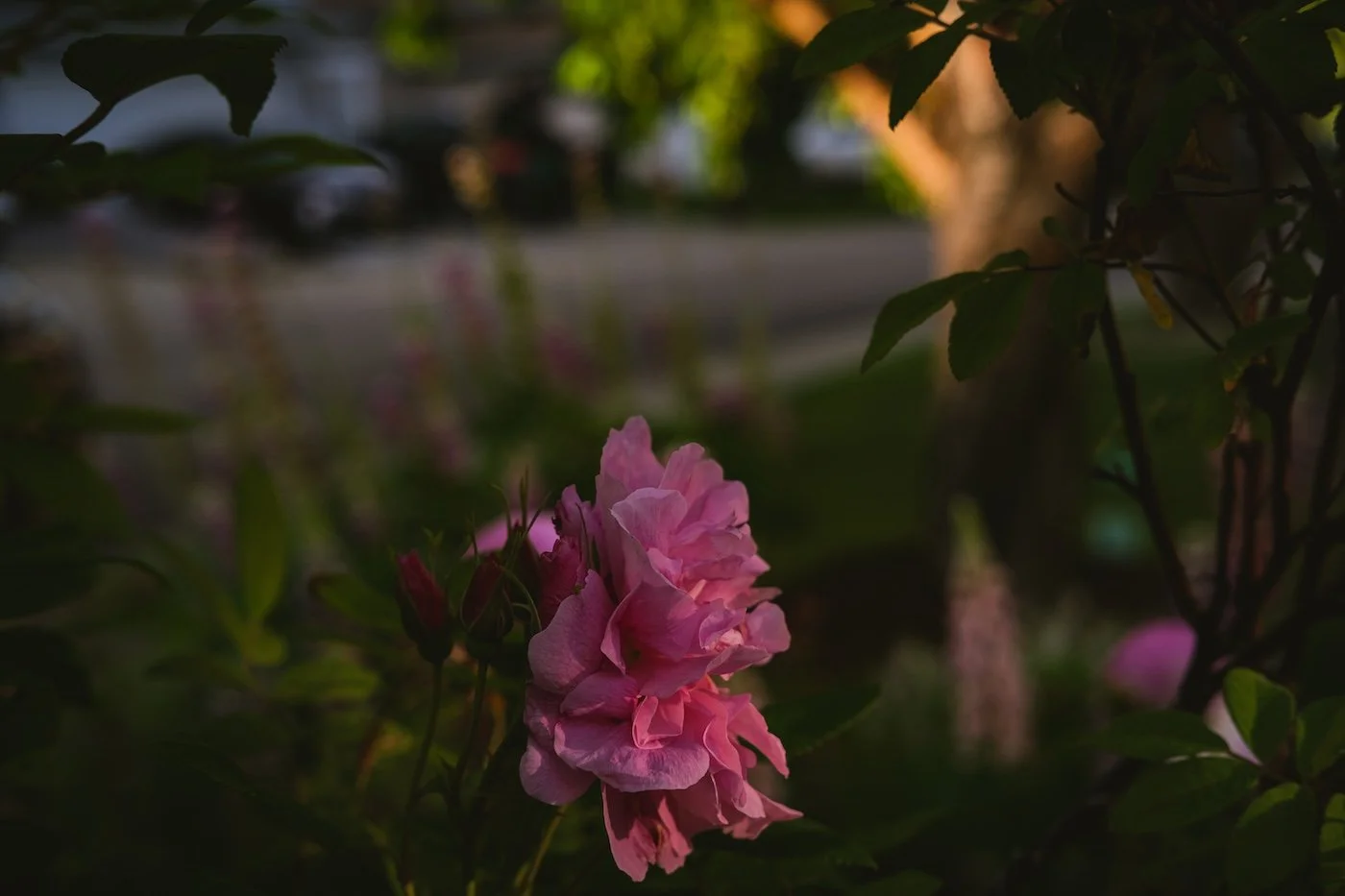
— Years ago, if you’d asked me, I wouldn’t have predicted that we’d have to be making a case for the importance of art, or literature, or even flowers. But here we are. And I know I’m preaching to the converted but in his notebooks, Thoreau wrote, as a reminder: “This is a world where there are flowers.” Well, at least so far. I’m sure someone will try to ban those too. Anyway, if you enjoy flowers in paintings, you might like to watch this slow reel of Rob. Some of his recent work here.
— My Simone Weil books called to me from my bookshelf this past week. It’s been quite a while since I’ve had them down. Gravity and Grace first. I re-read my underlined passages and added a few. I guess I’m back to thinking about the soul. But also attention. (Which makes sense with the Peter Hujar film). I’m lame I guess but I got a bit weepy reading because I was thinking how it all hits different now, but also how lucky I am that I’ve lived so long and read this work so often over years (my edition came out in 1997 and I think I bought it at Orlando Books (no longer with us) way back in the day around that time). Just the way that deep thoughts and writing change you over and again. Persistent reading. And is that lost too? I hope not. I hope you’re blessed with reading books through time.
— From G & G: “As soon as we have a point of eternity in the soul, we have nothing more to do but to take care of it, for it will grow of itself like a seed. It is necessary to surround it with an armed guard, waiting in stillness, and to nourish it with the contemplation of numbers, of fixed and exact relationships.”
— Writing for Weil has to do with being honest with oneself, and paying attention. And on work, there is no one more poignant, especially given her biography. “Workers,” she says, “need poetry more than bread. They need that their life should be a poem. They need some light from eternity.”
— If you’ve read Rumi and the Red Handbag, you know of my interest in this quotation: “The love of our neighbor in all its fullness simply means being able to say to him: 'What are you going through?' It is a recognition that the sufferer exists, not only as a unit in a collection, or a specimen from the social category labeled 'unfortunate,' but as a man, exactly like us, who was one day stamped with a special mark by affliction. For this reason it is enough, but it is indispensable, to know how to look at him in a certain way. This way of looking is first of all attentive. The soul empties itself of all its own contents in order to receive into itself the being it is looking at, just as he is, in all his truth.”
— What do we have now? We have our attention. And Weil said that we must cultivate a “gymnastics of the attention.” She says, “Generally speaking, a method for the exercise of the intelligence, which consists of looking.”
— I mention the importance of considering the opposite, here, often enough. The origins of my thinking on that are from Weil. “There is no contradiction in what is imaginary. Contradiction is the test of necessity.” And, “Contradiction experienced to the very depths of the being tears us heart and soul: it is the cross.” She advises: “Method of investigation: As soon as we have thought something, try to see in what way the contrary is true.” This in a greater discussion of affliction. Well, if this interests, you can always seek out the book.
— Her most quoted words, “Attention, taken to its highest degree, is the same thing as prayer. It presupposes faith and love. Absolutely unmixed attention is prayer.”
— I still believe that as Kay Ryan once wrote, it’s important to stay sweet and loving. I read a post recently here from 2017 and it’s interesting to measure yourself, too, against old blog posts. I guess that’s a gift I’ve given myself, too. In the same post I also quote Robert Bly who said: “I am proud only of those days that pass in undivided tenderness.” But tenderness is different now too, and my ability to stay sweet and loving has eroded, or at least, transformed — it is thinner and worn and perhaps more real. Thin in the way that certain metals are hammered to wafers, gold, for example. My understanding of it is different. As much the fallout from the relentlessness of the day job as anything. Unless you’ve worked in the inner city through the aftermath of a pandemic do you even know humanity? :) Well, it’s a thing alright. The proximity to constant affliction. And the burnout is fine because it’s real. At first I couldn’t live with the burnout but now I am the burnout. So that changes you and I don’t think I’ll change back, but that’s perhaps a gift too. I mean, I can read Weil now in a different light. Stay curious! people say. And oh, I am, I really am. Just not in the ways the exhortation might imply or indicate.
— And it’s also true that one is mad to share anything personal anywhere but in a poem but the old personal blogging habit dies hard.
— Speaking of ye olde Blogge. We are coming up on the 10th anniversary here in September. I think I’ll be sharing a lot of old posts in August for fun. And I’m just generally rethinking my digital imprint. As are so many. I’ve deleted various accounts I never used anyway, Bluesky and Threads. I’m scaling back my insta. I’m going to be reconfiguring this space with luck. And if you rely on seeing my posts via Facebook, I’m going to stop sharing posts there soon, too. So you might like to subscribe, old school, or bookmark this site. Thanks for being here and reading what was most likely way too long :)