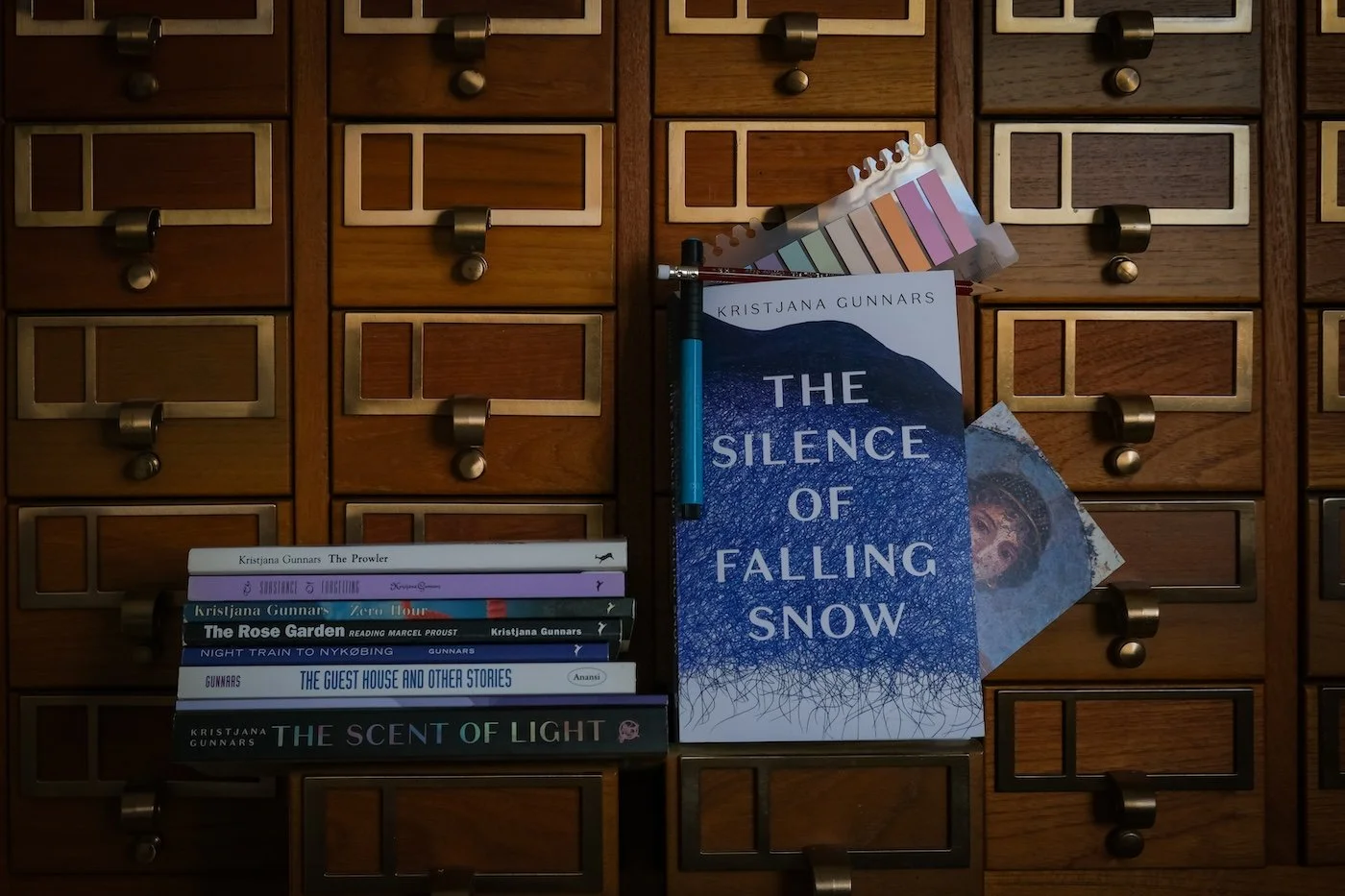
Bibliotherapy: Loss and The Silence of Falling Snow
Whatever Kristjana Gunnars writes, I will read. It’s that simple.
I’ve written about her work here before many times. I’ve mentioned The Silence of Falling Snow in a previous post, but I’ve sat with it now for a while, re-read passages, underlined more. There is no one who thinks and writes quite like Kristjana Gunnars.
The first sentence of the book: “This is a story. It is a story about someone accompanying another to the last gate.”
Because I’ve been reading a bit about bibliotherapy of late, I thought it might be helpful to look at the book through that lens. In those lists of conditions that every book on bibliotherapy has, this one would fit under grief, or loss. But even so, it’s a book about love and living. Gunnars notes, “For some ironic reason, when death is near, everything comes alive. Even inanimate things come alive.” And later in the narrative, she remembers that “William Blake indicated on many levels that silence is a sign of love.”
She delves into Buddhism as part of this journey, this accompaniment, and so much of it is useful. There comes a point, in my experience, where being able to clear your mind is the most important thing you can do. And Gunnars notes that Tibetan Buddhists “do not think talking about your pain is a good idea. If you dwell on your problems, they say, you simply dwell on them. They do not go away; instead they compound and get worse.” Instead, your best recourse is to clear your mind.
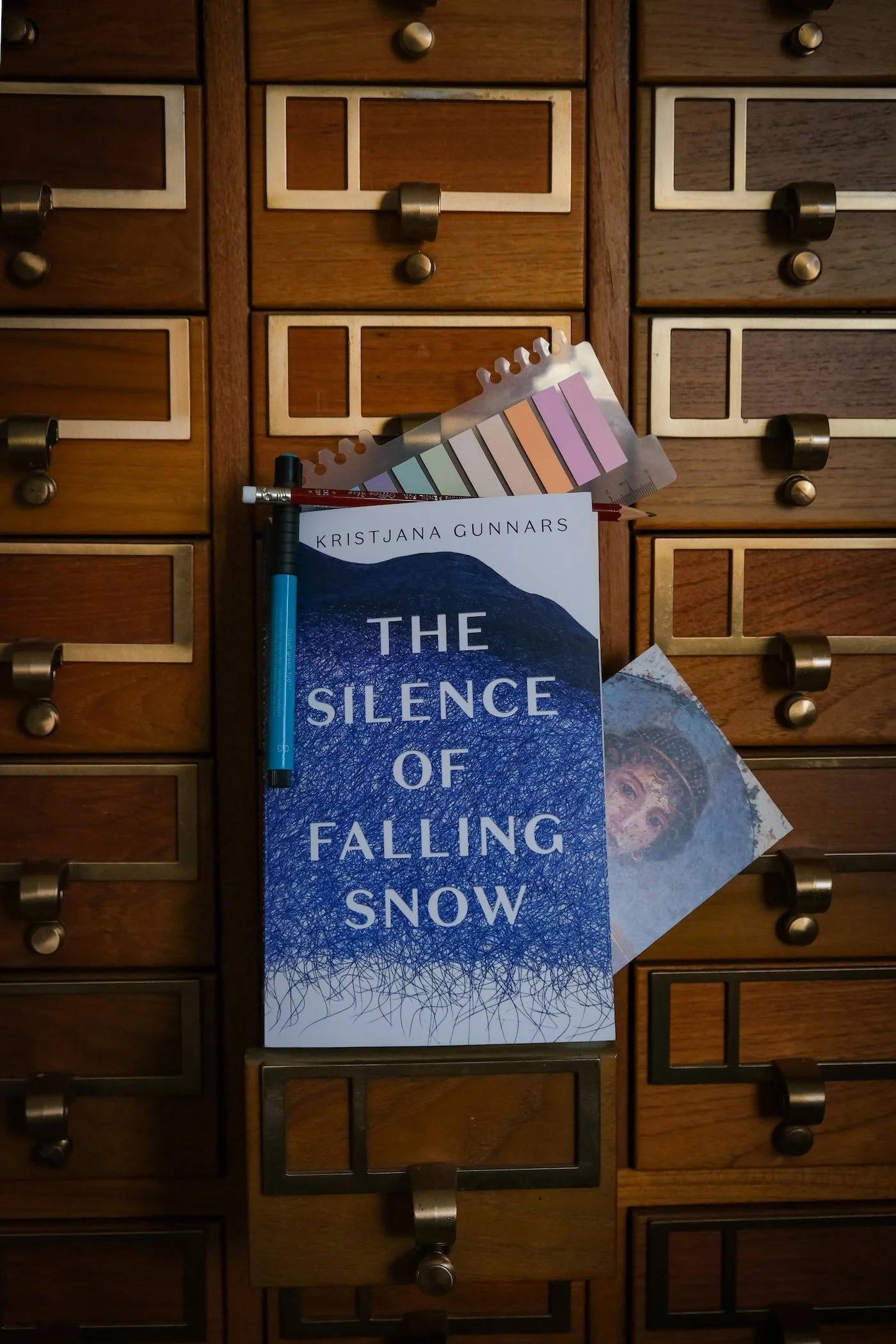
Gunnars talks about a book that she bought in the 90s that is now useful to her. She says, “sometimes books wait for the right time to be read. Books are like living begins: they have their own intentions.” And I think that this is the sort of book that you just might want to have around for when you need it or it calls to you.
There is a passage near the end of the book where Gunnars reminds us that being alive is hard and living “requires great focus.”
I came upon the work of Clarice Lispector because I read about her in the work of Kristjana Gunnars and after reading this passage I thought to read again one of Lispector’s Chronicas. It’s titled “Yes.”
“I said to a friend:
— Life has always asked too much of me.
She replied:
— But don’t forget that you also ask too much of life.
That is true.”
There are books that are gifts and there are some that surpass, so generous are they, and The Silence of Falling Snow is that. I’m grateful for the thinking through of living, of being there for someone at their ending, of all the details, observations, dailiness, intermingled with the thoughts of others, the Buddhist philosophy and its application to the conditions at hand.
She reminds us that if the wood is wet there will be no sparks to light a fire. “Conditions for clarity of thought have to be created; they do not happen on their own.” Which is something to think about in a number of contexts.
We cover some of the same ground, in our writing. I think of the references to equanimity and angels on page 156 for example. There is such a depth of thinking and a quiet persistent focus here, that it’s almost startling, which is somehow a great comfort, too.
To return to the subject of bibliotherapy, I do feel like this book would be useful for anyone who has suffered loss. (In other words, everyone, at some point). I wonder if the idea of bibliotherapy, though I’m interested in its uses, reduces? Though also, maybe, it’s just another access point. And we need as many access points into literature, into books, as possible. I’m interested in the mystery of books, the way they work on us and through us, through time, in ways that we can’t always talk about with any precision. I think about the way book clubs talk about books, (stereotypically), and the way I talk about books with my writer friends or my library friends. When I tell someone about a book I love I don’t usually mention what ailments I think it might alleviate.
I also believe that part of bibliotherapy is finding the book yourself. Coming upon it. Sometimes it’s one you already own. Or you hear about it. You browse. You remember a mention, a review. You seek. The seeking is part of the therapy. Of course, when you’re in a particular condition, maybe having the right book placed in your hand is a salve. I’m sure it is.
Well, I place this book in your hand (metaphorically) for when you might need it.