With No Illusions But With Some Joy – On Asemic Writing
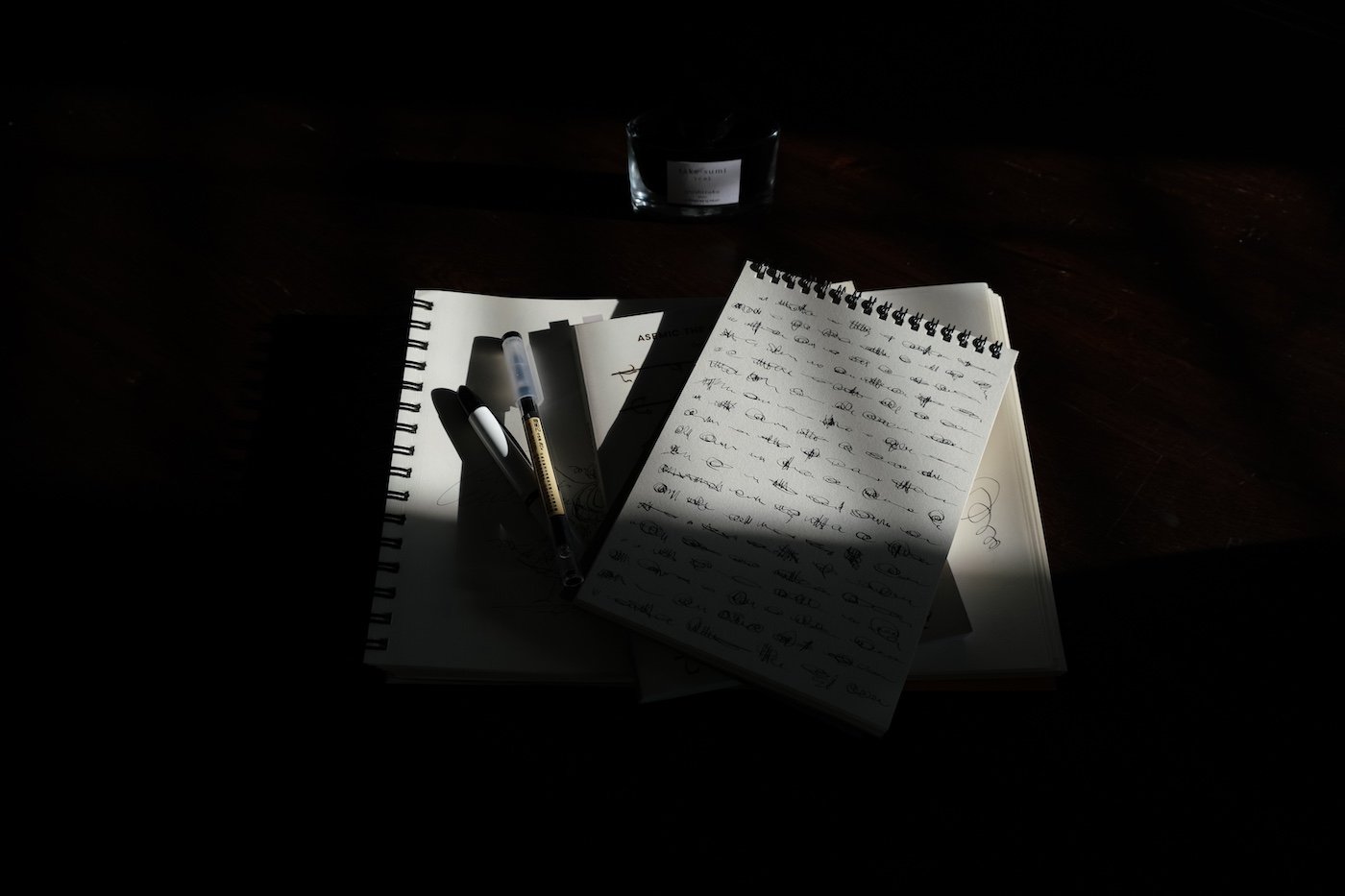
Last spring I wrote a post about my asemic writing practice. It’s still something that I regularly do — as meditation practice, and because it feels important to prioritize human mark making these days.
You might know that the French theorist, Roland Barthes, was a practitioner of asemic writing. In the book Signs and Images he talks about his practice:
“From time to time, I like to do…but here the difficulty begins — to do what? Drawing, painting, graphic art…? What I do barely has a name.”
“In this incidental operation, there is then, all the same a sort of aesthetic aim. With no illusions, but with some joy, I play the artist.”
I like that he mentions the restfulness of the practice of asemic writing:
“Or, conversely, the pleasure of a sort of cosy sense of craftwork (laying out one’s pastels, inks, brushes and sheets of paper on a workbench). Or even the relief (the restfulness ) of being able to create something that isn’t directly caught in the trap of language and dodges the responsibility each sentence inevitably carries with it — in short, a sort of innocence that writing denies me.”
I’m not the only writer who has been calmed, entranced, called to asemic writing. Artists and writers alike have found the practice meaningful.
“With no illusions, but with some joy, I play the artist.”
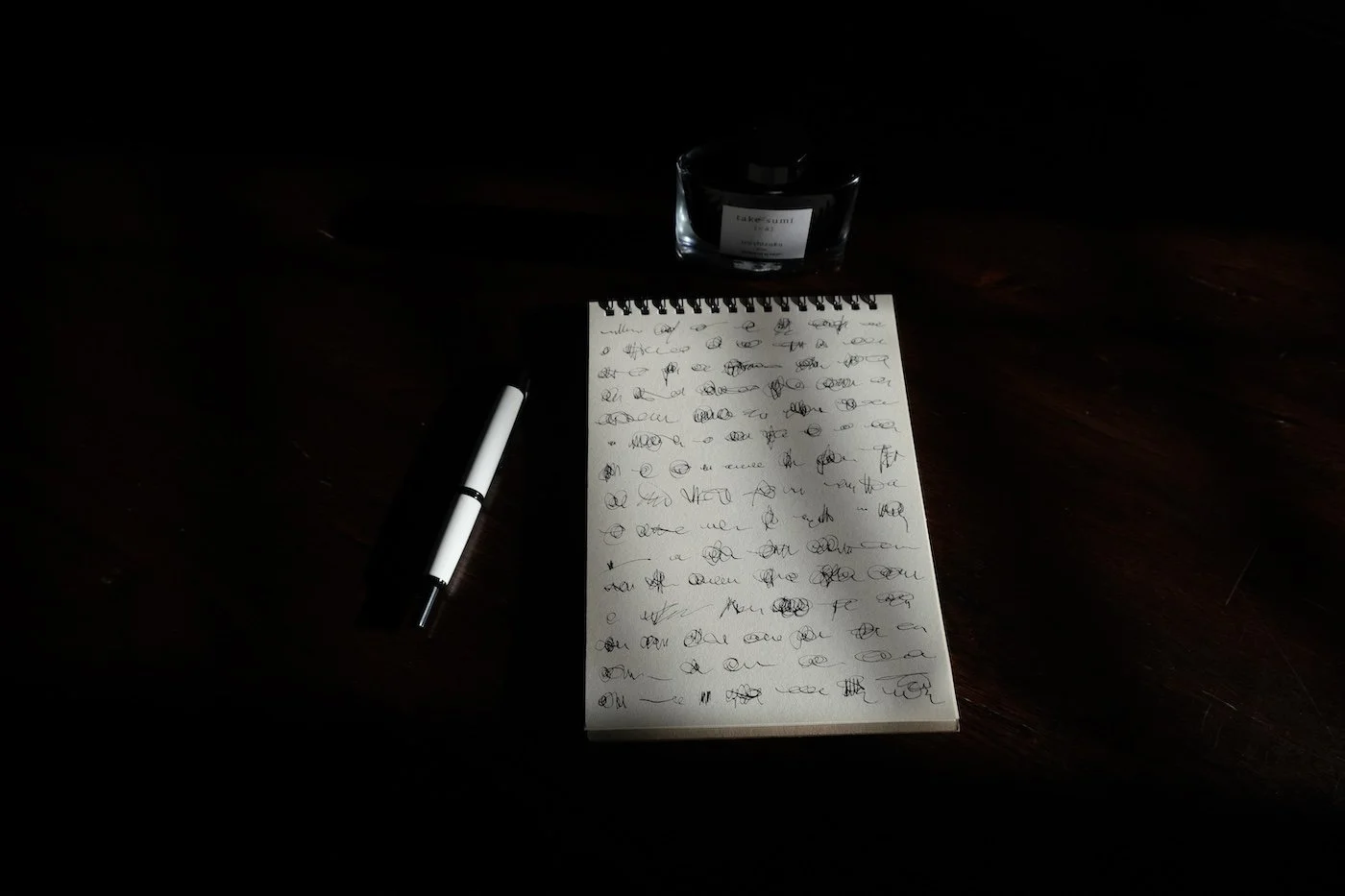
Looking at my notebooks full of angel drawings and asemic mark making, I’m sure the average person would see a sort of madness. I prefer to concentrate on the meditative quality. But maybe the marks are a kind of refusal. (To be anything less than completely human). The more marks I make the more I realize that it is impossible to make the same mark twice. In fact, I’m generally trying for a unique mark/scribble. Some days the marks are responding to a piece of music I’m listening to but other times, I’m notating the silence, or the sounds in my skull. They are a ravelling and an unravelling, a joy, a calm, a human touch. Sometimes deliberate, sometimes wild, or thoughtless, beyond thought, a flying, a soaring, a darkness, a skating, a tangle.
The practice of asemic writing can be grounding, contemplative, freeing. It can be a place to say things when it is difficult to speak. It can hold a lot of thoughts that it feels the world doesn’t really want. It can inspire other thoughts. It puts one into the creative frame of mind, an openness, a place to imagine.
The beauty of asemic writing is that the materials needed are basic: writing instrument, paper.
Some people prefer pencil or charcoal and paper. My preference is fountain pen. I use the Pilot retractable FP with 1.1 italic/stub nib which I’ve been using for eons. I use Pilot ink, black, take-sumi. And then any notebook with fountain pen friendly paper. My morning music usually starts off with The Lark Ascending. I’m a weirdo that way.
It seems symbolic these days, to simply make a mark, a human mark on a piece of paper.