Live Like an Artist – Two Books
I’d dipped into both of these books in the photos at the end of last year, but more or less devoured them during “dead week.” In fact, I read a ton, stayed off social media for significant amounts of time, and no big surprise, feel better. That said, I watched this reel on IG of Freya India where she talks about the idea of online communities being a joke. Certainly it’s an important moment to reconsider the idea that social media is at all or even remotely social. It feels generally that we’re just unpaid employees, sharing our content for others to profit from it.
It’s no wonder that I’m re-thinking the whole idea of the blog — maybe it’s so old fashioned that it’s worth hanging onto. Or maybe it’s so old fashioned that it’s ridiculous. I’m feeling a bit nostalgic about when I started blogging — the idea was to take up space, to connect with like-minded people, and to share things in the mode of the gift — we often spoke of “amplifying” each other, our work, of building community. (Weren’t we all excited by the ideas in Lewis Hyde’s book then?).
Looking for a link to the Hyde book, I come across Margaret Atwood talking about the book in The Paris Review back in 2019. She says, “One guarantee: you won’t come out of The Gift unaltered. This is a mark of its own status as a gift: for gifts transform the soul in ways that simple commodities cannot.”
I’ve generally / traditionally thought of blogging as something that you give away. You share for free, and then the gifts magically return. And this is so often the case. Writing in this space has given me so much. But as I mentioned in my NY post, it’s time to re-think the enterprise, and probably most everything else we do online. What do we want to give up, and what makes sense to keep? Like, honestly, I’d miss saying, hey, read this you’ll love it!
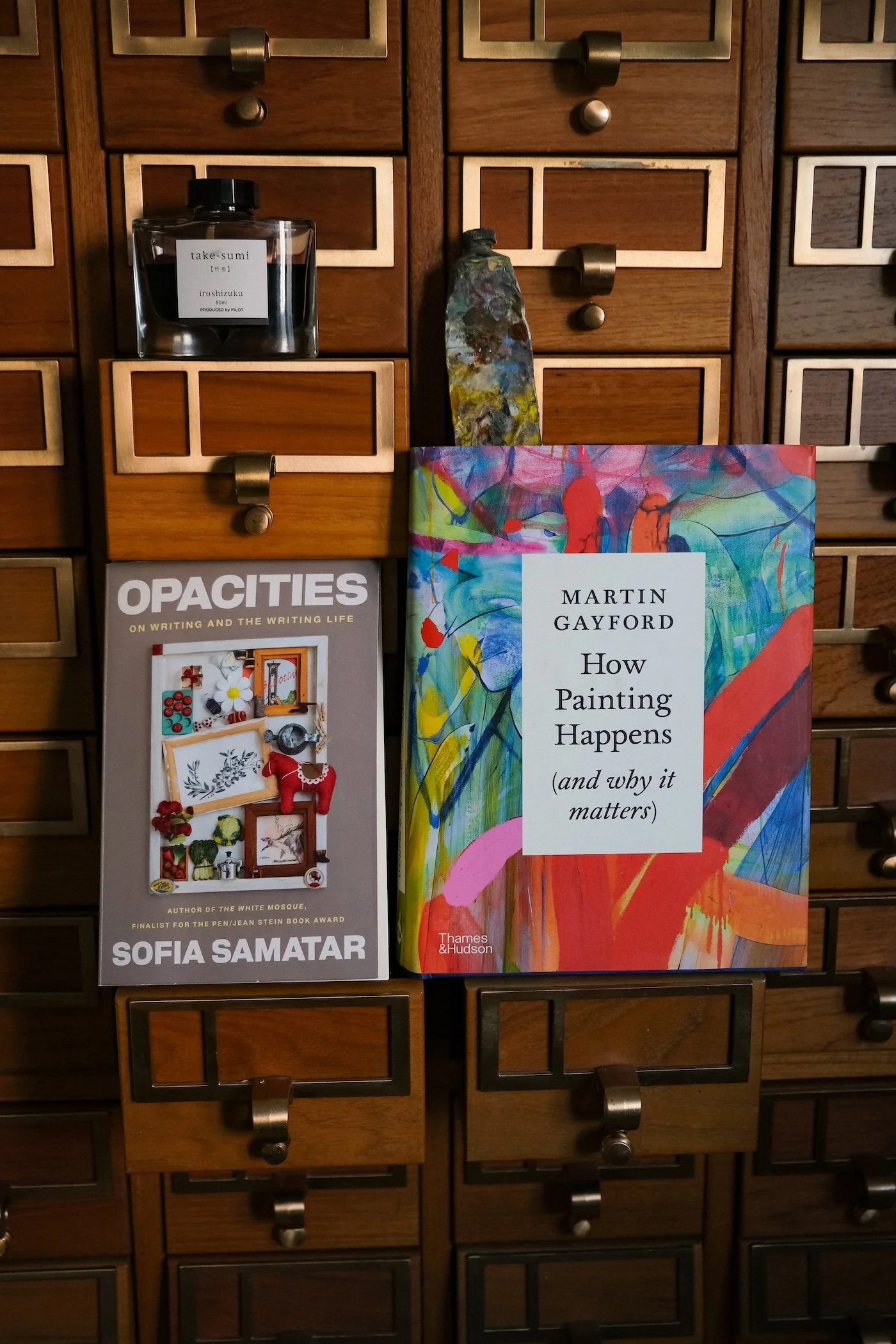
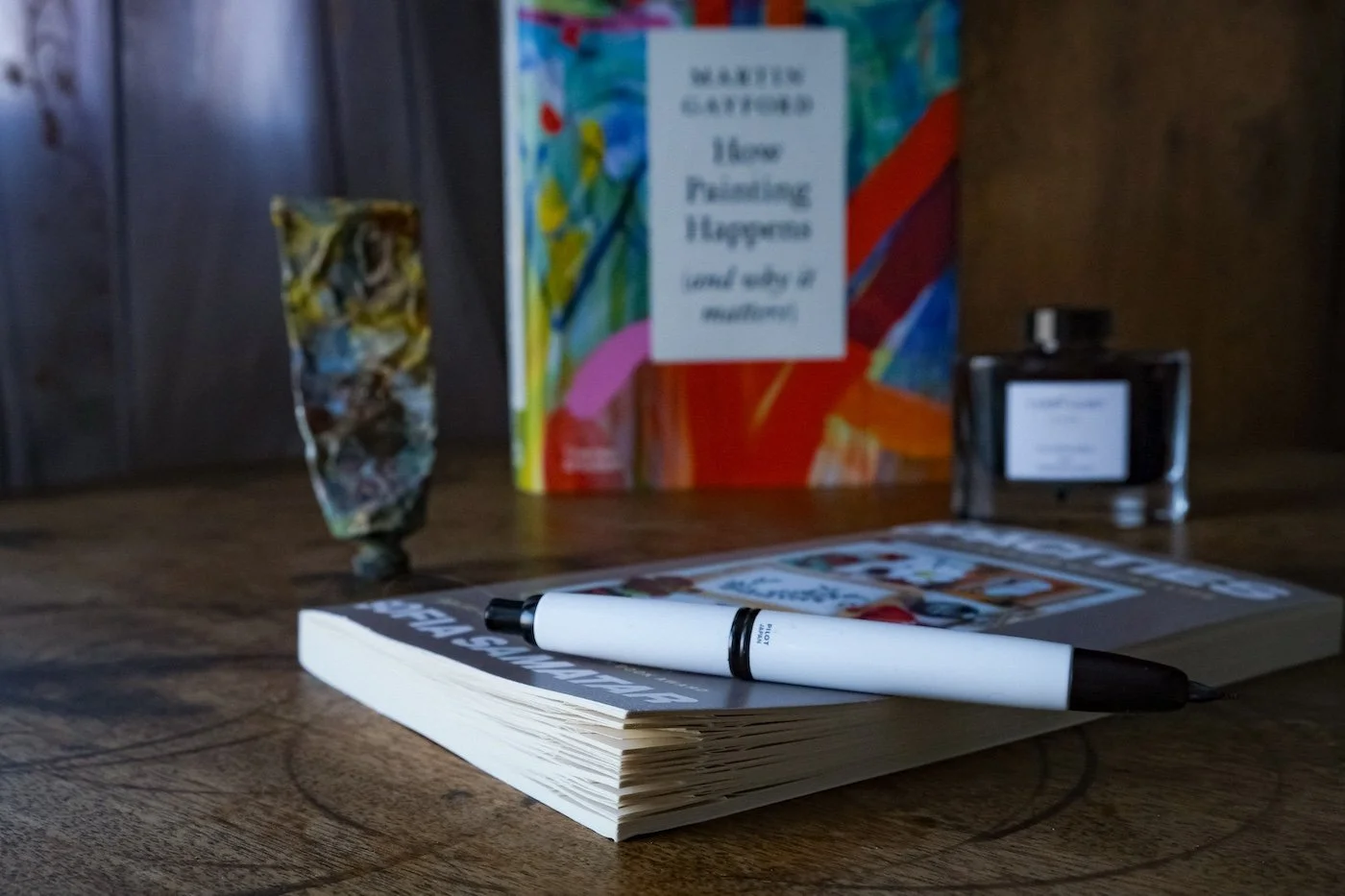
Certainly some books come along that seem like rare gifts, and Sofia Samatar’s Opacities feels like that for me — you can tell by the way I’ve dogeared every second page. (A gift that one first pays for at a book store though…). The first sentence: “The dream is to create a book that will also be a tonic: not a course of study but a course of treatment.” She quotes Hervé Guibert, who says he’s “beginning a new book to have a companion…” And I know that exact feeling, especially as I begin writing something new this year.
The book references and often addresses a friend (another writer I esteem, Kate Zambreno). Samatar writes: “Perhaps what we were searching for, you wrote to me, was a way to write toward a “negative community: the community of those who have no community.””
Maybe we’re just more likely to find a community in books. This idea I first read about via Carolyn Heilbrun, of unmet friends, resonates these days. Though maybe this has to do with the record snowfall we’ve had here during the holidays, the way we’ve been forced to become hermits to some extent in our latitude 53 dwelling. (My small car stranded at the bottom of the hill a block from my house because the snow is too deep and the trucks have all left big ruts). You know I think I’d be happy to just stay indoors until spring — if only that were possible.
In short, I felt I was encountering a kindred spirit reading Opacities: On Writing and the Writing Life. I suppose lately I’ve been returning to ideas I had in my early writing life — of getting smaller, becoming more hermit-like and disappearing. Samatar has a friend who calls her withdrawal from the public spheres (blogs, comment sections, social media) “doing an Emily Dickinson.” Dropping out is a “way to stay alive as a writer.” Embracing, instead, correspondence among writers as a way to exchange “confidences and confidence.”
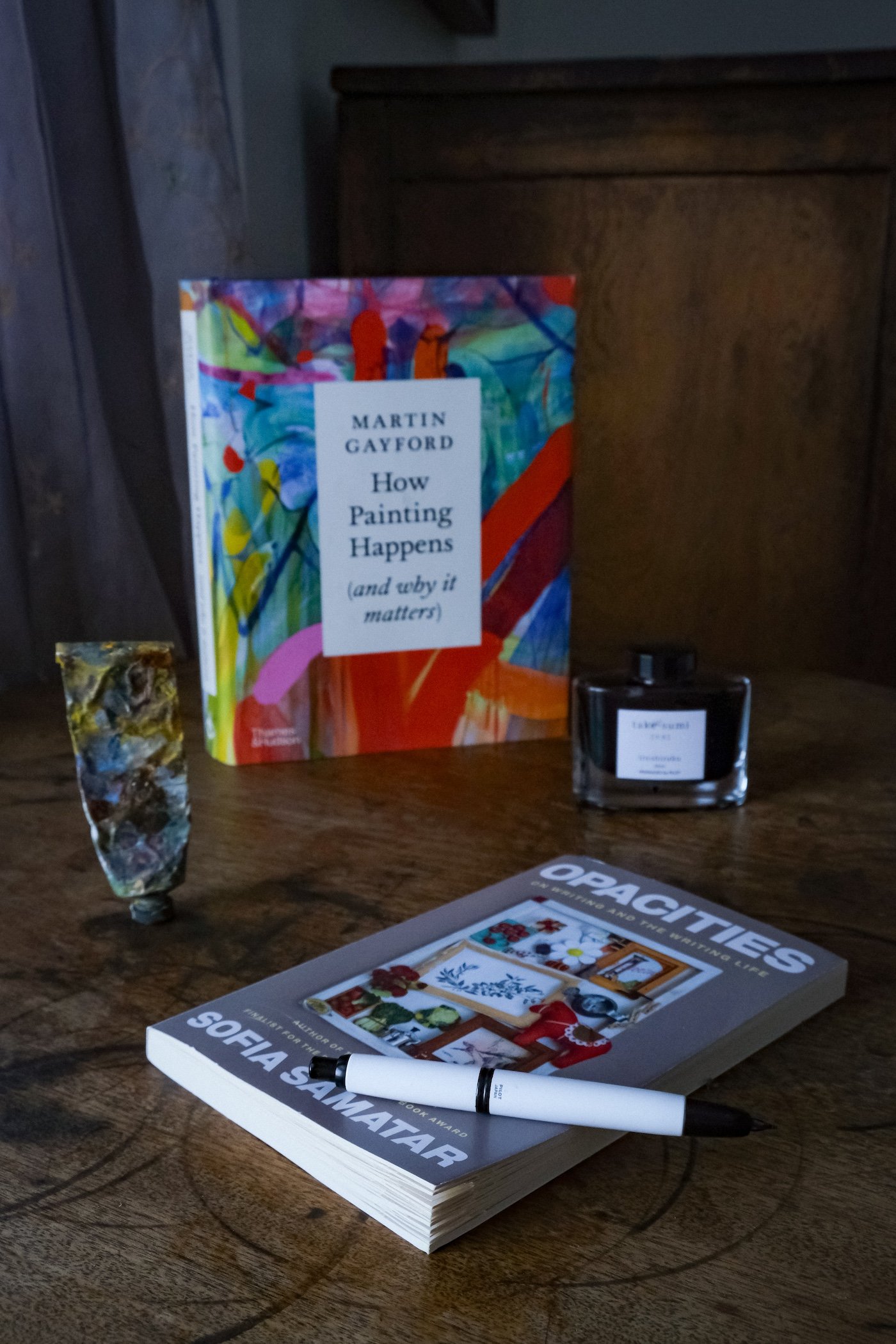
The next book I read is How Painting Happens: (and why it matters) by Martin Gayford. Reading it felt like being in the most amazing company of painters past and present and with this guide who navigates the timeline effortlessly and insightfully. Gayford understands how painters think via the substance of paint itself. If you’re at all interested in making marks yourself, or understanding more about the making of marks, or the way we experience paintings, how artists experience paintings, this book will truly captivate.
It heartened me. Gayford says, “Painting can be a way of transmitting a huge amount of information that would be difficult or impossible to communicate in words.” He brings together a contemporary painter, such as Jenny Saville, with the work of Van Gogh. She says thinking of Van Gogh’s work, “Making a mark is a way of saying you exist. I think most painters find that. It’s as important as eating.”
Even though I’m not a painter, I really needed this book right now. Next, I’ll be passing it off to the painter in my life, of course.
I’ve been fluctuating between this painterly need to make a mark, to say I exist, and to utterly disappear. Ain’t that always the way with the creative life?